
Water Heater Replacement
Eight Signs You Need A New Water Heater
Tanks rarely fail without warning. They fail without anyone noticing the warning.
The eight things a licensed plumber looks for, how to read the age off the label, and how to tell water heater repair from water heater replacement in a Denver home.
A water heater that has been quietly declining all year tends to give up in January, and the reason is not coincidence. Winter is when the equipment gets asked for the most work, and a tank already near the end of its service life is the one that does not deliver.
Almost every failed tank we replace had been signaling for months. The signs are just easy to live with. Hot water runs out a bit sooner, the basement makes a noise that has always been there, the water looks slightly off first thing in the morning. None of it feels urgent until there is water across the floor. Knowing which signs matter is the difference between choosing the date of your water heater replacement and having it chosen for you.
Signs You Need A New Water Heater: The Short Answer
Replace the unit when the tank body itself leaks, when the hot water runs rusty, or when the heater is past twelve years and hits a significant failure. Repair it when the fault is a thermocouple, a gas control valve, a heating element, a thermostat, a dip tube, or a drain valve.
Age decides most of it. A conventional tank typically lasts eight to twelve years, and mineral heavy Denver water shortens that considerably when the tank is never flushed and the anode rod is never checked.
Why Winter Is Harder On A Water Heater
Why does a water heater struggle more in winter? Because the water arriving at the house is substantially colder than in summer, so the heater has to raise it through a much wider temperature range to reach the same output. That means longer burn times, longer recovery between showers, and less usable hot water from the same size tank.
On a healthy unit, the difference is noticeable but manageable. On a tank whose burner is insulated from the water by a layer of sediment, or whose elements are scaled, or whose capacity is already compromised, winter is what exposes the problem. Demand rises at the same time, because people take longer showers when it is cold and the holidays put more people in the house.
Eight Signs A Water Heater Is Near The End
Take ten minutes with a flashlight and look at the unit itself rather than waiting for it to tell you.
- It is more than ten years old. A conventional tank typically runs eight to twelve years. Past ten, you are on borrowed time, and the question shifts from whether to replace it to whether you get to choose when.
- Rumbling, popping, or a kettle sound. That is water boiling underneath a layer of hardened sediment on the tank bottom. The sediment insulates the burner from the water, which wastes energy, overheats the steel, and shortens the life of the tank.
- Rusty or discolored hot water. If the discoloration appears only on the hot side, the corrosion is inside the tank. That means the glass lining has failed and the steel underneath is going, which is not a repairable condition.
- Water pooling at the base. Check whether the moisture comes from a fitting, the relief valve discharge, or the tank body itself. Fittings and valves can be repaired. A weeping tank body cannot.
- Hot water runs out faster than it used to. Sediment displaces usable volume, so a forty gallon tank effectively becomes a thirty gallon tank. If the showers got shorter and nothing else in the house changed, the tank is telling you something.
- The temperature swings during a single shower. On a gas unit that often points at a failing dip tube or heavy sediment. On an electric unit it usually means one of the two elements has failed and only half the tank is heating.
- The relief valve weeps or discharges. Sometimes the valve itself has failed. More often the system pressure is too high or a thermal expansion tank is missing or waterlogged. Either way it needs diagnosis, and the discharge pipe should never be capped.
- Visible rust at the top fittings or the flue connection. Corrosion at the nipples and around the vent connector indicates long term moisture and can also signal a venting problem, which matters for safety rather than just for the equipment.
Shut it down and call for these
Water running from the tank body rather than a fitting. Any smell of gas near the unit. Scorching or soot around the burner compartment or the vent. A carbon monoxide alarm sounding. In those situations, close the cold water shutoff above the heater, turn the unit off, and call.
How To Find Out How Old Yours Is
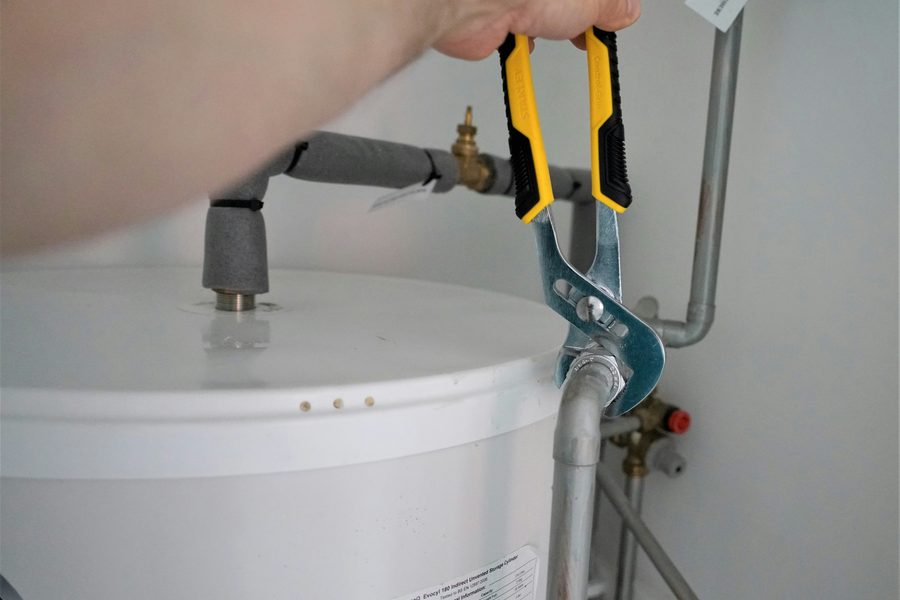
Age is the single most useful number, and it is printed on the unit. Find the rating plate, which is the sticker on the side of the tank, and locate the serial number.
Manufacturers encode the manufacture date differently, but most serial numbers start with a group of digits or a letter that represents the month and year the unit was built. Some are obvious once you look, such as a serial beginning with a four digit sequence for week and year. Others use a letter for the month followed by a two digit year. If the code is not readable, the manufacturer name and model number are enough for a plumber to date it quickly.
Write the date on the tank with a marker once you find it. The next person who looks at it, including you in five years, will be glad it is there.
Not Sure Which One You Have
Find Out Before The Tank Picks The Date
A licensed plumber reads the age, checks the venting and the expansion side, and tells you whether you are looking at a repair or a replacement. Where both are reasonable, you see them side by side in writing before anything starts.
Call 720-295-9903Water heater repair and replacement across Denver Metro.
Water Heater Repair Or Replacement: What Is Worth Fixing
Plenty of water heater problems are repairs, not replacements, and a good plumber tells you which one you are looking at rather than defaulting to the larger job.
Usually a repair
Thermocouple and pilot assembly failures. Gas control valve replacement. A failed heating element or thermostat on an electric unit. A leaking drain valve. A failed relief valve. A dip tube. Loose or corroded fittings at the top of the tank.
Usually a replacement
A tank body that is leaking anywhere. Rusty hot water from internal corrosion. A unit past twelve years with a significant failure. A tank so heavily sedimented it will not flush. Any situation where the repair approaches the value of a new unit on equipment already near the end of its life.
The honest version of this decision depends on age. A four year old heater with a failed gas valve is worth repairing without much debate. An eleven year old heater with the same failure is a harder call, and the right answer depends on what else the inspection finds. We give you both options side by side, in writing, and you decide.
The Two Maintenance Jobs That Extend Its Life
Two things keep a tank alive longer than anything else, and most water heaters in Denver have received neither.
Flushing the sediment
Minerals settle out of the water and accumulate on the bottom of the tank. Draining the tank annually clears them before they harden into a layer the burner has to heat through. On a tank that has never been flushed, the sediment can be thick enough that a first flush is no longer straightforward, which is worth knowing before you start.
Checking the anode rod
The anode rod is a sacrificial metal rod inside the tank that corrodes so the steel tank does not. It is doing its job right up until it is consumed, and then the tank starts corroding instead. Replacing a spent anode rod is a modest job that can add years to a tank. Almost nobody does it, which is a large part of why so many heaters fail at the low end of their expected range.
If you want the short version: a tank that gets flushed and has its anode checked tends to reach the top of its service range. A tank that gets neither tends to reach the bottom of it.
What Changes Water Heater Replacement In Denver
Sediment builds faster here
Mineral content in the local supply means sediment accumulation is a real maintenance item rather than a theoretical one, and on tankless units the same minerals scale the heat exchanger, which is why annual descaling is required maintenance on those rather than an optional service.
Altitude affects the equipment
Gas appliances installed above two thousand feet have to be set up for the elevation, and Denver sits well above that line. Equipment that was never configured correctly for altitude runs less efficiently and wears faster.
The flue may be shared
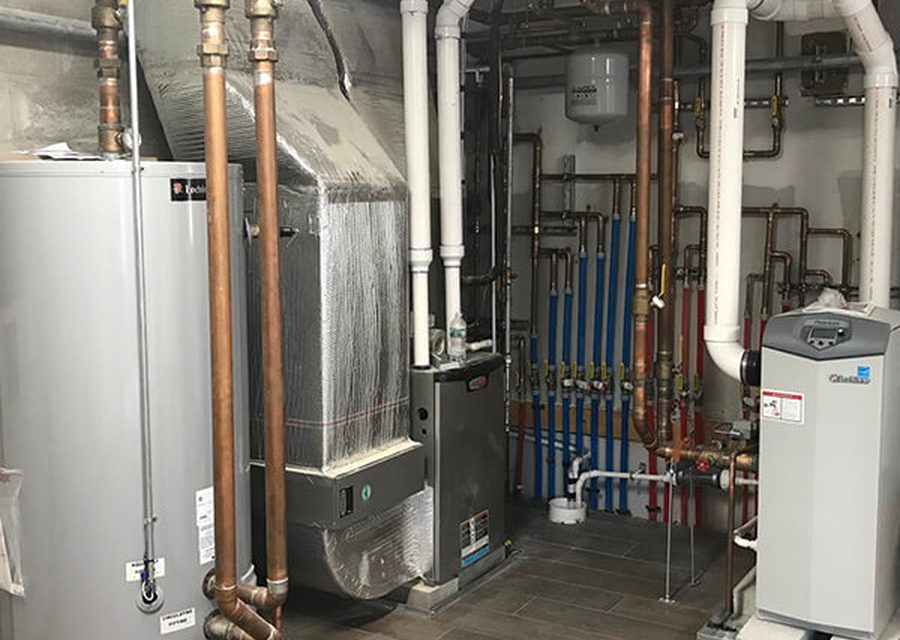
In many Denver basements the water heater and the boiler vent into one chimney. If the boiler gets replaced with a modern condensing unit that vents out a side wall, the water heater is left alone on a flue sized for two appliances, and it will not draft properly. That is a safety issue and it needs to be addressed at the time of the boiler work rather than discovered later.
You may need a thermal expansion tank
If the home has a pressure reducing valve or a backflow preventer on the water service, it is a closed system, and code requires a thermal expansion tank. We regularly find installations that never had one, which shows up as a weeping relief valve and premature stress on the tank and fixtures.
Availability has tightened
House Bill 23-1161 took effect January 1, 2026 and requires new gas fired water heaters sold or installed in Colorado to meet ultra low nitrogen oxide limits or hold current ENERGY STAR certification. Existing working units are unaffected and repairs remain allowed, but remaining pre deadline inventory is selling through, which is narrowing size options and stretching lead times. That is a practical argument for deciding on a failing heater in the fall rather than in the middle of a January emergency.
Our licensed plumbers repair and replace tank, tankless, and heat pump units across Denver Metro. See the full water heater service page for what is involved in each type.
CO Lic. #PC.0005786 · CO Lic. #EC.0101962. This article is general guidance for Denver Metro homeowners and does not replace an on site inspection of your specific system.
Questions
Water Heater Questions
Is a small amount of water under the tank ever normal?
Condensation on the outside of a tank can occur on a cold fill, particularly in humid conditions, and it dries. Anything persistent is not normal. Dry the area completely, put down a sheet of paper, and check it the next day. If it is wet again, find the source. Water from a fitting or the relief valve discharge is repairable. Water coming from the tank body itself means the tank is finished.
Why does the hot water run out faster in winter?
Incoming water is much colder in winter, so the heater has to raise it through a wider temperature range to reach the same delivery temperature. Recovery takes longer and the usable volume from the same tank drops. If the decline is dramatic rather than modest, sediment or a failed element is usually adding to the seasonal effect.
Should I replace a working heater before it fails?
It depends on age and on where the unit sits. A heater past twelve years in a finished basement above living space carries real downside if it lets go, and replacing it on your schedule avoids both the water damage and the emergency. A unit of the same age sitting on a concrete floor next to a drain is a lower stakes gamble. If a repair will get you through, we will tell you that instead.
Can I flush the tank myself?
On a heater that has been flushed regularly, yes, and it is straightforward. On a tank that has never been flushed in ten years, the drain valve frequently clogs with hardened sediment or fails to reseat afterward, which turns a maintenance task into a leak. If the unit is old and has never been serviced, have a plumber do the first one.
Does the ultra low NOx law limit my replacement options now?
It narrows them. Since January 1, 2026, new gas fired water heaters sold or installed in Colorado must meet ultra low nitrogen oxide limits or carry current ENERGY STAR certification. Units already in Colorado inventory before the deadline can still be installed, but that stock is thinning, which affects certain sizes and configurations more than others. We confirm what is actually available for your specific application before you commit.
Are there rebates on a new water heater?
Xcel Energy offers rebates on qualifying heat pump water heaters, and the terms change from year to year. We confirm current eligibility for the specific equipment before you commit rather than promising something that has since changed. Financing is also available for qualifying projects, subject to credit approval.
Keep Reading
Boiler Will Not Turn On? What To Check First
The seven checks that explain most no heat calls in Denver, and the point where you should stop and call.
Read the article
How To Keep Pipes From Freezing In Denver
What freezes first here, the fall checklist, and what to do if a line has already frozen.
Read the article
Water Heater Repair and Installation
Tank, tankless, and heat pump. Repair, replacement, venting, and permits across Denver Metro.
View water heatersBook A Water Heater Visit
Find Out Which One You Are Looking At
A licensed plumber inspects the tank, the venting, the pressure, and the expansion side, then tells you whether it is a repair or a replacement, in writing, before any work begins.
CO Lic. #PC.0005786 · CO Lic. #EC.0101962 · 2M GL · 5M Umbrella · Bonded · Insured