
Boiler Repair
Boiler Will Not Turn On? What To Check First In A Denver Home
The first cold morning is the worst possible time to find out something failed back in April.
The seven checks that explain most no heat calls in Denver, what a healthy first fire looks like, and the point where you should stop and call a licensed plumber.
Most boiler failures in Denver are not discovered in January. They happen quietly in spring, when the system shuts down for the season, and they sit undisturbed until the first morning someone turns the thermostat up and nothing happens.
A boiler that ran fine in March can fail to start in October for reasons that have nothing to do with the boiler itself. Pressure bleeds off over the summer. Air works its way into the loop. A circulator that sat still for five months seizes. An expansion tank that lost its charge years ago finally shows itself. None of that announces itself until you ask the system for heat.
The good news is that most of it is visible before you ever turn the thermostat up. Here is what to look at, in the order a plumber would look at it, and where boiler repair in Denver becomes a job for a licensed plumber rather than a homeowner.
Boiler Will Not Turn On: The Short Answer
Check these six things in order before you call: the service switch and the power, the gas valve, the pressure gauge, the thermostat, the relief valve discharge pipe, and the expansion tank.
Low system pressure and a failed expansion tank cause most no heat calls in Denver after a summer shutdown. Stop and call a licensed plumber if you find any smell of gas, water on the floor, soot around the burner or flue, or a burner that lights and drops out repeatedly.
What To Check When A Denver Boiler Will Not Turn On
What is a boiler startup check? A boiler startup check is a short inspection of the pressure, the water level, the venting, and the visible condition of a hydronic heating system, performed before the first call for heat of the season. It is not a service or a tune up. It is a look for the small number of conditions that turn a working boiler into an emergency once it fires.
Homeowners can do most of the visual portion themselves. The combustion side, the gas pressure, and anything involving the flue belong to a licensed plumber. The point of walking the system yourself is to catch the obvious problems early, while you still have the option of scheduling the repair rather than calling on the coldest night of the year.
Seven Things To Check Before You Turn It On
Do this with the boiler cold and the thermostat still set low. Give yourself fifteen minutes and a flashlight.
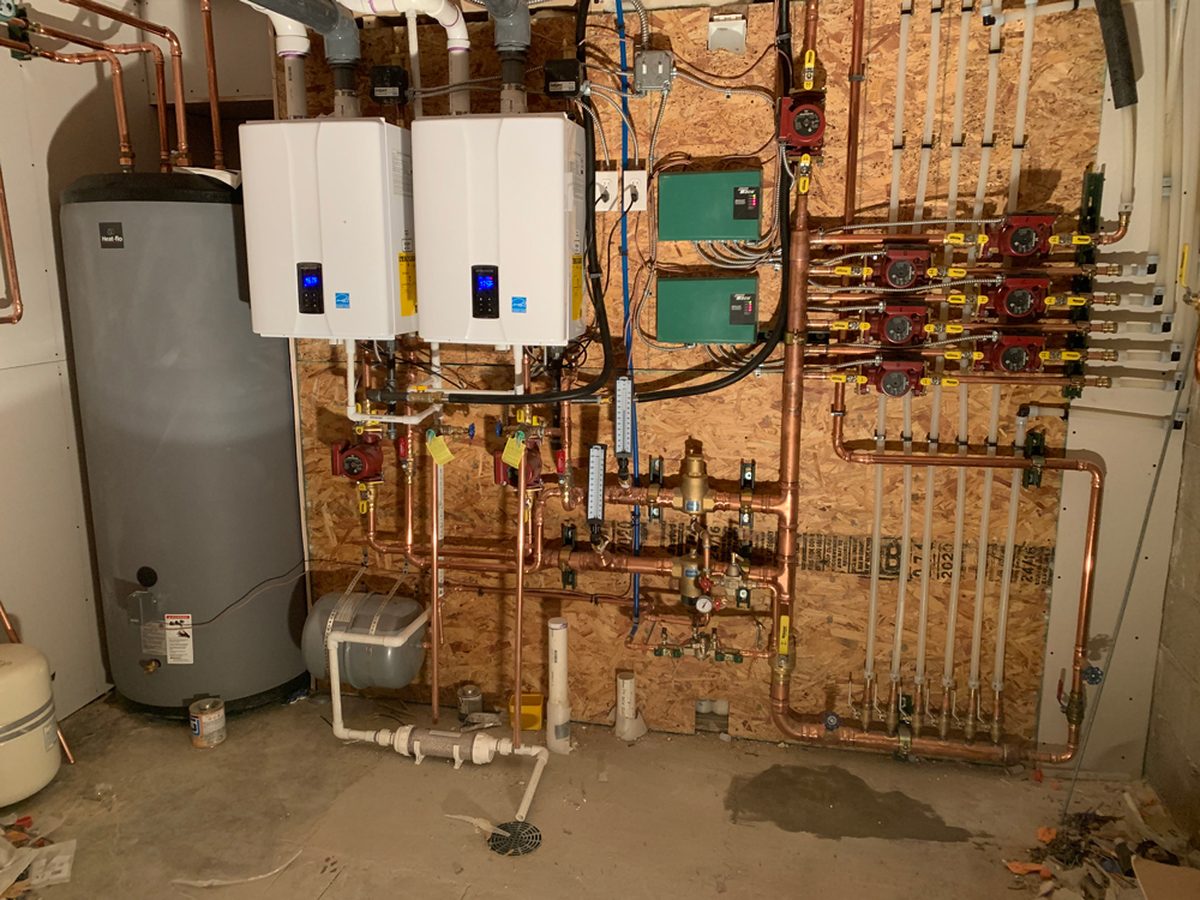
- Read the pressure gauge. On a typical two story home with a cold system, the gauge should sit somewhere around twelve to fifteen psi. A reading near zero means the system lost water over the summer and has air in it. A reading well above twenty on a cold system points at a failed expansion tank, a stuck fill valve, or both. Note the number before you do anything else.
- Look at the floor. Mineral staining, a white or rust colored crust on fittings, or a dried ring under the boiler all indicate a leak that has been weeping for months. A slow leak is what drains system pressure over a summer, and it is also what quietly rusts out the bottom of a cast iron sectional boiler.
- Follow the relief valve discharge pipe. That pipe should run down toward the floor and end in open air. If the end of it is wet, crusted, or dripping, the relief valve has been letting go, and something upstream is causing it. Never cap that pipe, and never plug the valve.
- Check the expansion tank. Most modern systems use a small diaphragm tank hanging off the piping near the boiler. Tap it. The top half should sound hollow and the bottom half should sound solid. A tank that sounds full all the way through has lost its air charge and is no longer absorbing expansion, which puts that pressure into the relief valve instead.
- Clear the area around the boiler. Storage stacked against a boiler blocks the combustion air it needs and creates a fire hazard. In a tight utility room, that air path matters more than most homeowners realize. Move the paint cans, the holiday bins, and anything flammable well clear.
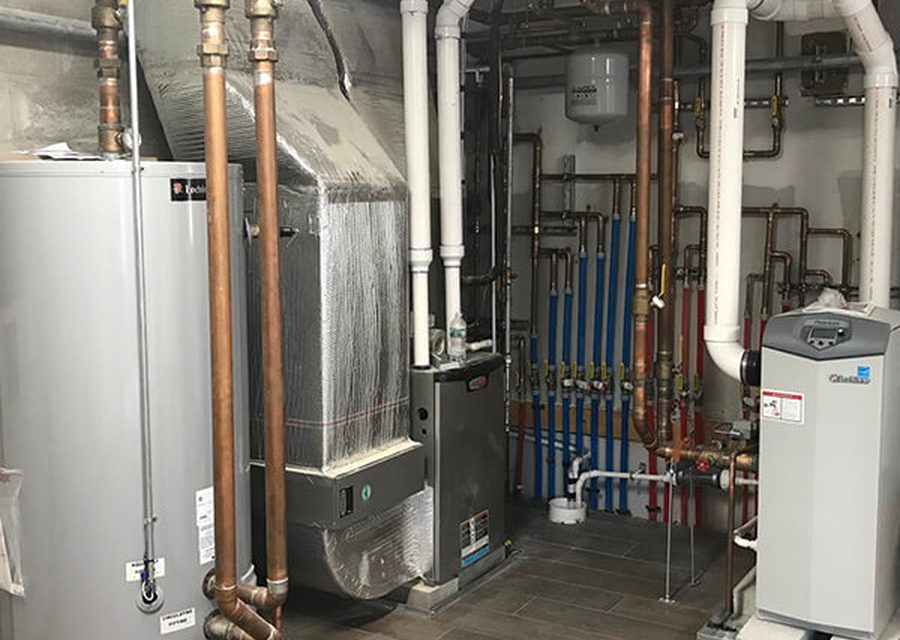
- Look up at the flue. You are looking for disconnected sections, visible rust, soot staining at the joints, or a sagging vent connector. In older Denver homes the boiler frequently shares a flue with the water heater, which makes the condition of that vent a matter for both appliances.
- Test the carbon monoxide alarms. Any home with a gas fired appliance needs working carbon monoxide alarms, and the start of heating season is the right time to press the test button and replace the batteries.
If the pressure is low, do not just refill it
Adding water to a system that lost pressure treats the symptom. The water went somewhere. Topping off a leaking system repeatedly also introduces fresh oxygenated water every time, which accelerates corrosion inside the boiler and the piping. Find the leak first.
What The First Fire Should Look Like
Once the visual check is clean, turn the thermostat up and stay in the room with the boiler. A healthy startup follows a predictable sequence. The circulator starts, the boiler purges, the igniter or pilot lights, the burner establishes, and the supply pipe leaving the boiler begins to warm within a couple of minutes.
Here is what should concern you during that first cycle:
- The burner lights and then drops out repeatedly. Short cycling on startup points at a flame sensor, an ignition control, a blocked vent, or a system that is not circulating water.
- Banging or hammering in the pipes. Sharp knocking as the system heats usually means trapped air or water sitting in a place it should not be. It is common after a summer shutdown and usually resolves with proper bleeding, but persistent hammering needs attention.
- A burning smell that does not fade. Dust burning off in the first few minutes is normal. A smell that continues past that, or any smell of gas at any point, is not.
- The pressure climbing past thirty. Watch the gauge as the system heats. A steady climb toward the relief valve setting means the expansion tank is not doing its job. Shut the system down.
- Nothing happens at all. Before assuming the worst, confirm the boiler has power, the service switch on the wall is on, and the gas valve is open. Those three account for a surprising share of no heat calls.
No Heat Right Now
If The Boiler Will Not Stay Lit, Stop Here
Repeated lockouts, a relief valve letting go, or pressure climbing on a cold system are not homeowner repairs. A licensed plumber diagnoses the combustion side, the controls, and the venting, and puts the price in writing before any work begins.
Call 720-295-9903Boiler repair across Denver Metro. We pull the permits and meet the inspector.
When One Radiator Stays Cold
A single cold radiator while the rest of the house heats is almost always air, and air rises. The radiators farthest from the boiler and highest in the house are the ones that trap it. On a system with bleed valves, opening the valve at the top of the cold radiator with a key and a cup underneath until water runs steadily clears the pocket.
Bleed the lowest radiators first and work upward, and check the pressure gauge afterward, because bleeding removes water from the system as well as air.
If bleeding does not solve it, the cause sits further upstream. A stuck zone valve, a failed thermostat on a zone, a seized circulator, or a balancing valve that somebody closed and forgot are the usual candidates. On converted gravity systems, which are common in Denver homes built before the war, an entire branch can be dead because of sediment blocking a supply line that was never designed for forced circulation.
What Makes Boiler Repair In Denver Different
Three local conditions change how these systems behave here.
Altitude changes combustion
At Denver elevation there is meaningfully less oxygen available for combustion than at sea level. Gas fired appliances installed above two thousand feet have to be set up for the altitude, either through a manufacturer high altitude kit or through certification for the elevation range. A boiler that was never adjusted correctly runs inefficiently, sooner or later fouls its heat exchanger, and in the worst cases produces combustion byproducts it should not. This is one of the more common issues we find on equipment installed by crews unfamiliar with the Front Range.
Old housing stock, newer equipment
Capitol Hill, Congress Park, Washington Park, Baker, and the Highlands are full of homes where original cast iron radiators are served by a boiler installed decades later. Those pairings can work well, but the two were never designed together. Oversizing is the usual result, which shows up as short cycling, uneven heat, and a boiler that wears out faster than the sticker suggests.
The shared flue problem
In a lot of Denver basements, the boiler and the water heater vent into one masonry chimney. That arrangement is fine as long as both appliances stay as designed. Replace the boiler with a modern condensing unit that vents out the side wall, and the water heater is left alone on a flue sized for two appliances. An oversized flue does not draft properly for a single small appliance, which leads to condensation, corrosion, and in bad cases combustion products spilling back into the room. Any boiler replacement in a home with a shared flue needs a plan for the water heater at the same time.
Stop immediately and call for these
Any smell of gas. A carbon monoxide alarm sounding. Water actively running from the boiler or the relief valve. Soot or scorching around the burner compartment or the flue. In each of those cases, shut the system off at the service switch, leave the gas valve alone, and call.
When To Stop And Call A Licensed Plumber
The visual walkthrough above is genuinely useful, and it costs you nothing but fifteen minutes. The line to hold is this: anything you can see and describe is fair game, and anything involving gas, combustion, venting, or the internals of the boiler belongs to a licensed plumber.
Call rather than continue if you find the pressure at zero, the relief valve discharging, an expansion tank that sounds waterlogged, visible leaks at the boiler body, a burner that will not stay lit, or any evidence of soot. Call sooner rather than later if the boiler is more than twenty years old and you have been nursing it along, because equipment lead times run longer once the cold weather arrives and everyone else discovers their problem at the same time.
Our licensed plumbers handle boiler repair, replacement, and seasonal service across Denver Metro. A plumber looks at the actual system, explains what is failing and why, and puts the price in writing before any work starts.
CO Lic. #PC.0005786 · CO Lic. #EC.0101962. This article is general guidance for Denver Metro homeowners and does not replace an on site inspection of your specific system.
Questions
Boiler Startup Questions
What pressure should my boiler be at?
On a typical two story Denver home with the system cold, the gauge usually sits around twelve to fifteen psi. Taller homes need slightly more, because the fill pressure has to push water to the highest radiator. The number climbs as the system heats, which is normal, but it should stay well below the relief valve setting. A cold reading near zero or a hot reading approaching thirty both indicate a problem worth diagnosing.
Why do my radiators knock and gurgle when the heat comes on?
Gurgling is air moving through water, and it is common after a system has been idle all summer. Bleeding the radiators usually clears it. Sharp banging is different. That is often water sitting where steam or flow should be moving freely, or piping expanding against a hanger or a joist. Occasional noise on startup is normal. Persistent hammering is worth having looked at, because it puts stress on joints and fittings.
Should I have the boiler serviced every year?
Yes. Annual service on a gas fired boiler covers combustion, the heat exchanger, the controls, the safeties, and the venting, none of which a homeowner can evaluate visually. Manufacturers generally require it to keep warranty coverage intact. Early fall is the right window, before the first cold snap fills the schedule.
My boiler is old but it still works. Should I replace it before winter?
Not automatically. Cast iron boilers frequently run for decades, and a well maintained older unit that passes a combustion and safety check is not an emergency. What changes the answer is a cracked section, a leaking boiler body, a failed heat exchanger, or repeated repairs stacking up. A licensed plumber inspects it and tells you which situation you are in. If a repair will get you through the season, we say so.
Does Colorado's ultra low NOx law apply to boilers?
No. House Bill 23-1161 applies to gas fired water heaters, not boilers. Boilers are exempt from that requirement. If you are replacing a water heater at the same time as boiler work, which happens often in homes with a shared flue, the water heater side does fall under the law.
Do you pull permits for boiler work?
Yes. Boiler replacement requires a permit and inspection through the City and County of Denver or the applicable suburban jurisdiction. We pull the permit and meet the inspector. Where the work touches electrical beyond a simple disconnect, a final electrical inspection is also required before the permit closes, and we hold both licenses.
Keep Reading
How To Keep Pipes From Freezing In Denver
What freezes first here, what to do before the first hard freeze, and what to do if a line has already frozen.
Read the article
Eight Signs You Need A New Water Heater
The eight signs a plumber looks for, how to read the age off the label, and repair versus replacement.
Read the article
Boiler Repair and Installation
Radiators, baseboard, radiant floor, and steam. Residential and commercial across Denver Metro.
View boiler serviceBook A Boiler Visit
Get It Looked At Before The First Cold Snap
A licensed plumber inspects the combustion, the controls, the venting, and the pressure, then tells you what the system needs and what it costs, in writing, before any work begins.
CO Lic. #PC.0005786 · CO Lic. #EC.0101962 · 2M GL · 5M Umbrella · Bonded · Insured