
Denver Drain Cleaning
A clog that keeps coming back is not a clog problem.
Kitchen, bath, laundry, floor and main line drains cleared by licensed plumbers across Denver Metro. When a clog has returned, we put a camera down the line and show you what is actually causing it rather than selling you the same visit again.
CO Lic. #PC.0005786 · Licensed · Bonded · Insured
- Plumbing License
- CO Lic. #PC.0005786
- Electrical License
- CO Lic. #EC.0101962
- Insurance
- 2M GL · 5M Umbrella
- Family Owned
- Since 2020
- First question
- One drain or all of themThe answer decides whether it is a branch or the main line.
- Right method
- Cabling or jettingChosen from what the line needs, not what is on the truck.
- Recurring clogs
- Camera down the lineYou see the same screen we do before anything is quoted.
- No permit needed
- Cleaning is maintenanceWe tell you if the job crosses into repair, which does need one.
Start Here
What Are Your Drains Doing?
Six patterns cover almost every drain call we take. Which fixtures are affected tells a plumber more than anything else you can describe.
Symptom
One Sink Drains Slowly, Everything Else Is Fine
Symptom
Several Fixtures Back Up Together
Symptom
The Toilet Gurgles When The Washer Drains
Symptom
The Same Drain Clogs Every Few Months
Symptom
Sewage Smell With No Visible Backup
Symptom
Water Comes Up In The Basement
The First Question
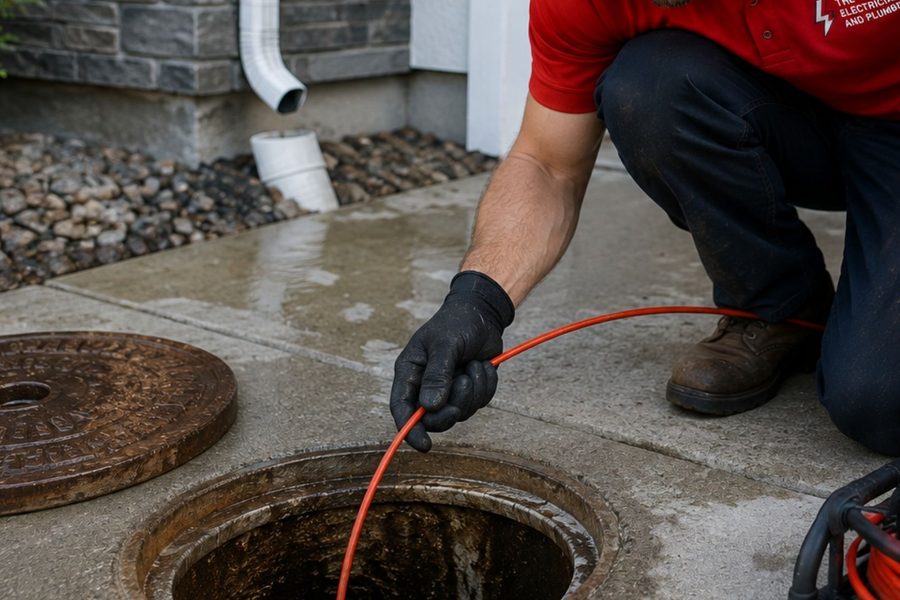
One Drain Or All Of Them?
It is the question we ask before anything else, and the answer changes the job completely.
What causes a clogged drain? A drain clogs when something restricts the pipe: hair and soap in a bathroom line, grease and food in a kitchen line, wipes and paper in a toilet line, or tree roots and collapsed pipe in the sewer main. Where the restriction sits matters more than what caused it.
One slow fixture with everything else draining normally is a branch problem, and it stays a small job. Several fixtures backing up together means the shared line is restricted, and clearing a branch will buy you a few days and fix nothing.
So before we reach for a machine we ask which fixtures are affected, what changed, and whether it has happened before. It takes a minute and it is the difference between clearing a drain and clearing the right drain.
The Right Tool
Cabling, Jetting, Or Camera First
These are three different jobs, and plenty of companies only own one of them. Here is when each one is correct.
| Factor | Cabling | Hydro Jetting | Camera Inspection |
|---|---|---|---|
| What it does | Drives a rotating cable down the line to punch through or cut out the obstruction. | Scours the full inner wall of the pipe with high pressure water. | Shows you the inside of the line so the cause can be identified rather than guessed. |
| Best for | Most household clogs, hair, paper, and root cutting. | Grease build up in kitchen lines and fine root hair over a long run. | Any clog that has come back, and any line where repair is being considered. |
| Older pipe | Generally safe on clay and cast iron when run by someone who knows the line. | Not always suitable. Fragile or already cracked pipe can be made worse. | Always safe, and it is how we find out whether jetting is appropriate at all. |
| What it leaves behind | A hole through the blockage. Residue can remain on the pipe wall. | A clean pipe wall, which is why clogs take longer to return. | A record of the pipe material, the defect, and how far it sits from the cleanout. |
| When it is the wrong choice | On a line that clogs repeatedly, because it treats the symptom every time. | On pipe that has not been inspected first. | On a simple one off clog in a single fixture, where it adds cost for no answer. |
Local Conditions
Why Denver Drains Clog The Way They Do
The age of the housing stock and the ground it sits in explain most of the recurring problems we are called to.
01
Clay Sewer Pipe And Mature Trees
Much of Capitol Hill, Congress Park, Washington Park, Baker and the older Highlands was built with clay sewer pipe laid in short sections, so every few feet there is a joint. A joint that weeps moisture is an invitation to the roots of the mature trees those neighborhoods are known for, and once a root is inside the pipe it grows toward the water. Cutting the roots restores flow. A camera tells you whether the joint itself now needs repair, which is the part a homeowner never gets told after a routine cabling.
02
Cast Iron That Has Closed In On Itself
Cast iron drains corrode from the inside. Scale builds on the pipe wall, the bore narrows, and the surface goes from smooth to rough, which gives everything passing through it something to catch on. A line that was fine for forty years starts clogging every few months, and no amount of cabling changes the diameter of the pipe. This is the case where jetting often helps, and where a camera decides whether the pipe can take it.
03
Expansive Clay Soil And Bellies
Front Range clay swells when wet and shrinks when dry, and it does that against buried pipe year after year. Over decades a section settles out of grade and forms a belly, a low spot that holds water and collects solids instead of carrying them away. The symptom is a main line that backs up on a slow, repeating cycle rather than all at once. You cannot cable a belly out of a pipe, and a camera is the only way to prove that is what you have.
Backing Up Again?
Tell Us Which Fixtures Are Affected
Describe what is draining slowly and what is not, and a licensed plumber will tell you whether it sounds like a branch or the main line before anyone comes out.
Before You Call
What Helps, And What Makes It Worse
Two of the items on the right are responsible for a large share of the main line blockages we clear.
Do This
- Stop running water in the house if anything is backing up, including the dishwasher and the washing machine.
- Note which fixtures are affected and which are fine, and tell us when you call.
- Pour grease into a container and bin it once it sets, rather than down the sink.
- Run cold water while the disposal grinds, and for a few seconds afterward.
- Use a hair catcher in showers and bathroom sinks. It prevents most of the clogs we clear.
- Find your cleanout and keep it accessible. It makes every future visit faster.
Avoid This
- Do not flush wipes, even the ones labeled flushable. They do not break apart and they are a leading cause of main line blockages.
- Do not use chemical drain cleaners. They can soften PVC, corrode metal pipe, and damage trap seals, and they rarely clear a main line.
- Do not keep plunging a toilet that is connected to a backing up main. The problem is downstream.
- Do not flush paper towels, cotton pads, dental floss, or cat litter.
- Do not pour cooking oil down the drain and chase it with hot water. It congeals further along the line.
- Do not accept a repair quote for a sewer line without seeing camera footage of the defect.
If you have already used a chemical cleaner, say so when you book. It changes how we open the line safely.
Scope
Drain Services We Provide
Residential and commercial, single fixtures through main lines.
- Kitchen sink drain cleaning
- Bathroom sink drain cleaning
- Shower and tub drain cleaning
- Toilet drain clearing
- Laundry and floor drain cleaning
- Main line drain cleaning
- Root cutting in sewer lines
- Hydro jetting
- Sewer camera inspection
- Cleanout location and installation
- Recurring clog diagnosis
- Grease line cleaning
- Garbage disposal and P-trap clearing
- Odor and venting diagnosis
- Commercial drain cleaning
- Drain line repair recommendations
Drains are one part of our full range of Denver plumbing services. When a toilet is the only fixture affected, see toilet repair and installation, and when the problem is under a sink see faucet and sink repair.
Where We Are Different
We Would Rather Not See You Again For The Same Clog
Repeat drain visits are good business and bad service. We do the thing that makes them unnecessary.
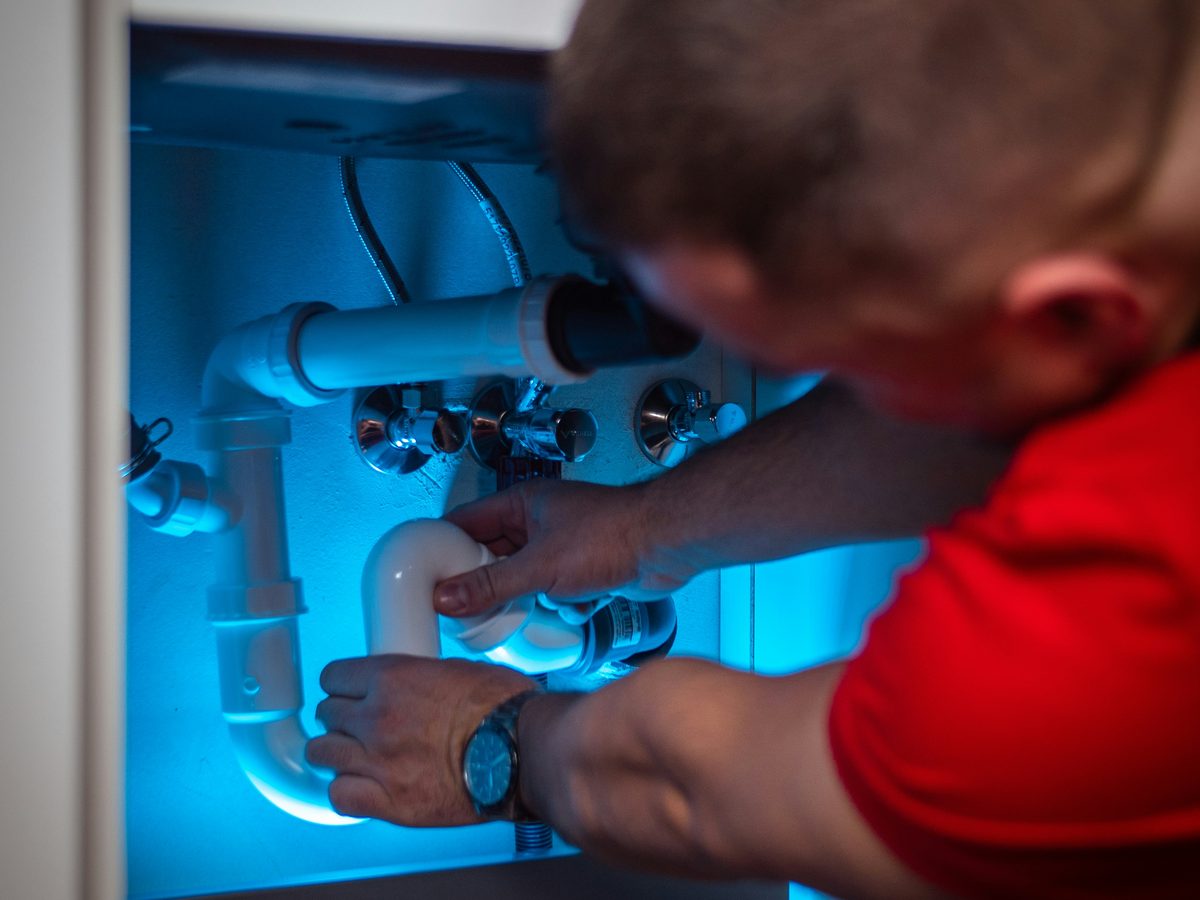
A drain that clogs once is a clog. A drain that clogs three times is a defect in the line, and clearing it a fourth time is charging you for the same visit again. When a clog has come back we put a camera down the line, and you watch the screen with us.
Sometimes it shows roots at a single joint, which is a targeted repair rather than a replacement. Sometimes it shows scale in cast iron, where jetting buys years. Sometimes it shows a belly, and then the honest answer is that no amount of cleaning will fix it.
All three of those are better conversations to have with footage on a screen than with a quote in an envelope.
What Denver Homeowners Say
Where We Work
Drain Cleaning Across Denver Metro
Dispatched from our Centennial office at 7076 S Alton Way, Suite H-200.
- Denver
- Centennial
- Aurora
- Littleton
- Englewood
- Lakewood
- Arvada
- Highlands Ranch
- Parker
- Castle Rock
- Greenwood Village
- Lone Tree
- Cherry Hills Village
- Westminster
Questions
Frequently Asked Questions About Denver Drain Cleaning
Is it one drain or the whole house?
This is the first question we ask, because the answer changes the job entirely. One slow fixture with everything else draining normally points at a local clog in that fixture branch, which is usually a short job. Several fixtures backing up together, or the lowest drains in the house gurgling when you run water upstairs, points at the main line instead. Clearing a branch when the main is the problem buys you a few days and solves nothing.
Why does my drain keep clogging in the same place?
A clog that returns is telling you the line has a defect rather than a blockage. Common causes in Denver are tree roots at a joint in clay sewer pipe, scale and corrosion narrowing old cast iron, a belly where the pipe has settled and holds water, or a section that has shifted out of grade. Cabling clears the obstruction but not the cause, which is why we put a camera down the line when a clog has come back rather than selling you the same visit again.
Should I use a chemical drain cleaner first?
We would rather you did not. Chemical cleaners generate heat and can soften PVC, corrode older metal pipe, and damage the rubber seals in your traps. They rarely clear a main line, and when they fail the caustic liquid is still standing in the pipe when a plumber opens it. If you have already used one, tell us before we start so we can protect ourselves and your fixtures.
What is the difference between cabling and hydro jetting?
Cabling, also called snaking, drives a rotating cable down the line to punch through or cut out the obstruction. It is fast, effective for most clogs, and gentle enough for older pipe. Hydro jetting uses high pressure water to scour the full inner wall of the line, which is what you want for grease build up in a kitchen line or fine root hair across a long run. Jetting is more thorough and is not suitable for every pipe, so we camera the line first rather than assuming.
Do you camera the line before quoting a repair?
Yes, on any recurring clog or any main line problem where a repair is on the table. Nobody should agree to a sewer repair based on a description. A camera shows the material the pipe is made of, where the defect sits, how deep it is, and how far from the cleanout, and you see the same screen we do.
Are flushable wipes really flushable?
They clear the toilet and then they stop. Unlike toilet paper, they do not break apart in water, so they snag on any roughness in the line, collect grease, and build into a mass that blocks the pipe. They are one of the most common causes of main line blockages we clear. The same applies to paper towels, cotton pads, dental floss and cat litter.
Why do Denver homes get root intrusion in sewer lines?
Much of the older housing stock in Capitol Hill, Congress Park, Washington Park, Baker and the Highlands was built with clay sewer pipe laid in short sections. Every joint is a seam, and a seam that weeps moisture attracts roots from the mature trees those neighborhoods are known for. Once a root finds the joint it grows inside the pipe where the water is. Cutting the roots restores flow, and a camera tells you whether the joint itself now needs repair.
What affects the cost of drain cleaning in Denver?
Four things move the number. Whether the problem is a fixture branch or the main line. Whether there is an accessible cleanout, since without one we have to pull a toilet or access the line another way. The method the line actually needs, since cabling and hydro jetting are different jobs. And whether a camera inspection is warranted, which it is on any recurring clog. We confirm all four on site and put the price in writing before any work begins.
Do you need a permit for drain cleaning?
No. Clearing a drain is maintenance and does not require a permit. Repairing or replacing a section of sewer or drain pipe does, and work on the sewer service outside the building is coordinated with the local jurisdiction. We will tell you clearly which side of that line your job falls on before we start.
How often should drains be cleaned?
A healthy line in a modern home does not need scheduled cleaning. Older homes with clay sewer pipe and mature trees are a different case, and where we have found active root intrusion we will tell you honestly what interval makes sense for your line rather than putting every customer on the same schedule.
Related Plumbing Services
Toilet Repair and Installation
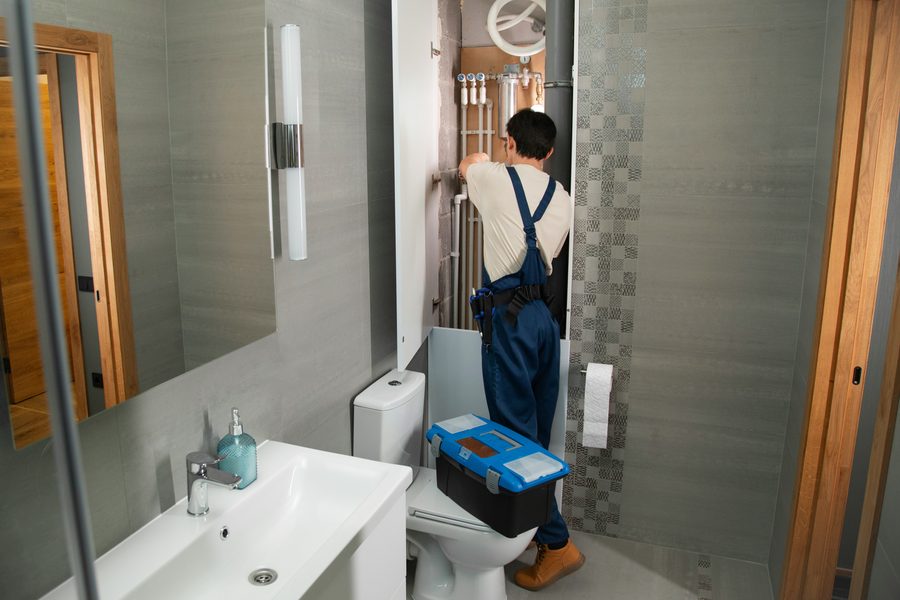
When one toilet clogs repeatedly and the rest of the house drains fine, the toilet is the suspect.
View toilet repair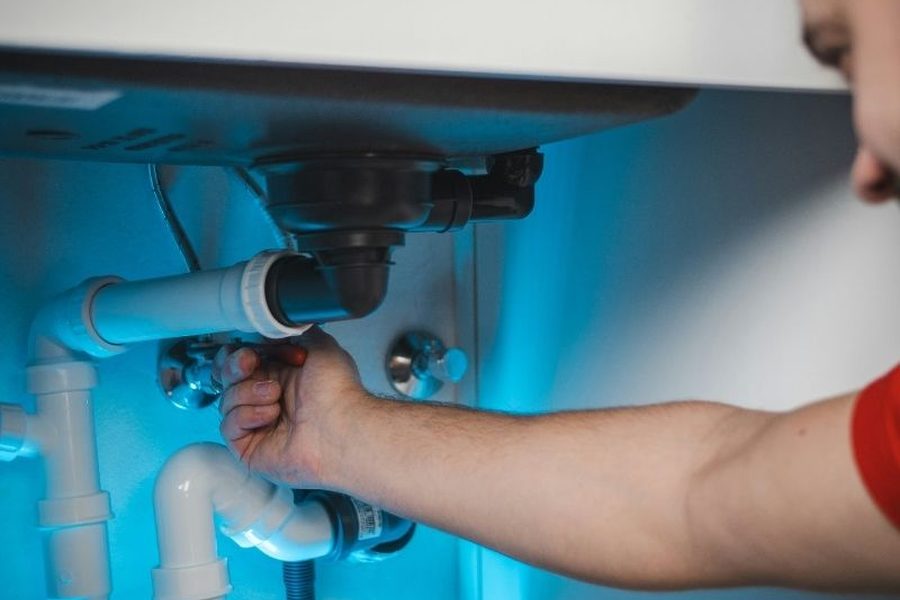
Faucet and Sink Repair
Sink drains, P-traps, and garbage disposals, which cause a good share of kitchen clogs.
View fixture repairs
Water Heater Repair
The same hard water that scales a tank also roughens the inside of an older drain line.
View water heatersBook A Visit
Clear It Once, Then Find Out Why
A licensed plumber clears the line, and where the clog has come back before, puts a camera down it so you can see the cause rather than take our word for it. Written price before any work begins.
CO Lic. #PC.0005786 · CO Lic. #EC.0101962 · 2M GL · 5M Umbrella · Bonded · Insured